Eggless Double-Chocolate Zucchini Cake

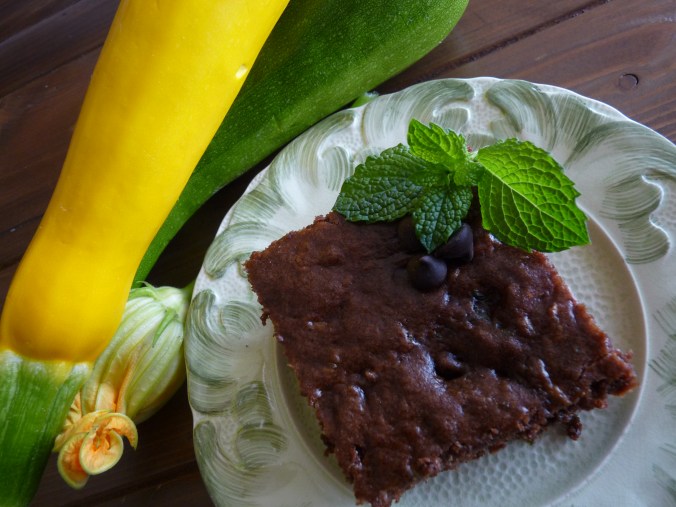
Short on eggs and long on zucchini? This cake is for you! It’s that time of year when either your garden, or your neighbour’s,  is overflowing with this popular, prolific squash.  My family loves this moist, delicious, easy-to-make cake.  After all, who doesn’t like turning a vegetable into chocolate? Sounds like a super-power to me! 

Eggless Double-Chocolate Zucchini Cake

2016-08-05 14.34.44

Ingredients:

  • 1/3 cup canola oil
  • 1 1/2 cups sugar
  • 3/4 cup buttermilk *
  • 2 cups grated zucchini
  • 1 tsp vanilla
  • 2 1/2 cups flour
  • 4 tbsp natural cocoa powder
  • 1 tsp baking soda
  • 1/2 tsp baking powder
  • 1/2 tsp cinnamon
  • 1/2 cup dark chocolate chips

Directions:

  1.    Preheat oven to 350°F (180°C).
  2.    Grease 9 X 13 pan or line with parchment paper.
  3.    In large bowl, mix canola oil and sugar.
  4.    Add milk, grated zucchini and vanilla. Stir well.
  5.    In separate bowl, combine dry ingredients and chocolate chips.
  6.    Add to zucchini mixture.  Batter will be thick.
  7.    Spread evenly in pan. Bake 25 – 35 minutes, until toothpick or cake tester inserted in the middle comes out clean.
  8.   Let cool completely before serving.

Storage:

Can be kept in a covered container for 2 to 3 days or frozen for up to 3 months.

Notes:

*Buttermilk substitute – add 1 tbsp vinegar to milk (at least 1% milk fat).

Want to preserve excess squash for later use? Simply measure out desired amount of grated zucchini (2 cups for this recipe), pack in freezer bags, date and label. Keep in the freezer for up to 6 months.


Simply Canola

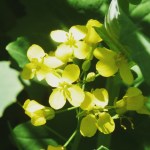
There is no denying  canola has been the shining star of agriculture across western Canada this past month — as it is every summer when in bloom.  It isn’t unusual to see people stopping alongside the road to snap a picture, or take a selfie against the gorgeous sea of yellow this crop provides. 

Even those of us who grow it, are taken in by the allure of those bright and beautiful blossoms and have been know to take a picture, or two, perhaps more… I’ll admit I may have gotten carried away this year, but the opportunity was irresistible and right out my backdoor. 

We are proud to be one of the over 43,000 Canadian farmers producing this heart-healthy, versatile, edible oil. These are a few of my favourite shots taken on our farm from June 22nd to July 18th. I hope you enjoy my 2016 canola pictorial diary.  

*Click on the pictures for additional description and information.  

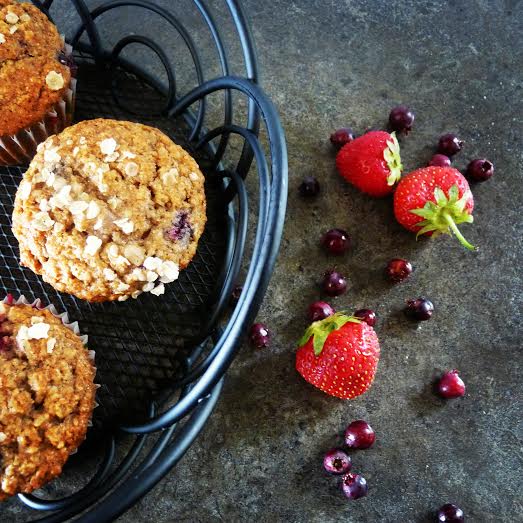
Three-Grain, Berry-Amazing Muffins

When strawberry and saskatoon season collide, your favourite muffins get a make-over! 

Three-Grain, Berry-Amazing Muffins

Muffins & Berries

Ingredients:

  • 1 cup quick-cooking oats
  • 1/2 cup barley flour
  • 1/2 cup whole wheat flour
  • 1 tsp baking powder
  • 1/2 tsp baking soda
  • 1/2 tsp salt
  • 1/2 tsp cinnamon
  • 1 large egg
  • 1 cup yogurt, plain
  • 3/4 cup brown sugar, packed
  • 1/3 cup canola oil
  • 1 tbsp finely grated lemon rind
  • 1/2 cup strawberries, diced
  • 1/2 cup Saskatoon berries 
  • 1 tbsp flour

Directions:

  1.   Pre-heat oven to 375°F (190ºC)
  2.   Lightly grease or line a 12-cup muffin tin with large paper liners.
  3.   Thoroughly mix oats, flours, baking soda, baking powder, salt and                      cinnamon in a large bowl.
  4.   In separate bowl, whisk together egg, yogurt, brown sugar, canola oil and     lemon rind.
  5.   In small bowl, coat berries evenly with flour.
  6.   Pour wet ingredients into dry ingredients, stir just to combine. Gently  fold in berries.
  7.   Using an ice cream scoop or large spoon, scoop the mixture evenly into    the muffin liners.
  8.   Sprinkle tops with oat or barley flakes.
  9.   Bake for 20 – 25 minutes, until toothpick or cake tester inserted into the     center of a muffin comes out clean. Muffins should be golden brown.
  10.   Set tins on cooling rack for 5 min. before removing muffins to cool        completely. Although, you may want to sample one while slightly warm…

Notes:

I love barley flour and have been substituting it for half of my all-purpose flour in all my baking since learning of its heart-healthy benefits.

Baking should be fun – don’t be afraid to get creative and use what you have on hand. Can’t find barley flour in your supermarket and have no whole wheat flour, just use all-purpose flour in its place. No plain yogurt?  Any berry flavour, lemon or vanilla works great too.  Orange rind can easily lemon rind.  The one cup of berries can be any combination of fresh or frozen you like – try raspberries or blueberries. Play with the flavours and create your own favourite version!

Storage:

Can be stored in a covered container for 2 to 3 days or frozen for up to 3 months. If the kids are home or company drops by, you likely won’t have to worry about that though…

Learn. Create. Eat. ~ Spicing it up with Chef Raghavan Iyer

When the Canola Eat Well team asks you to volunteer for an event, there is only one answer, “Absolutely!” You are guaranteed to learn along with the participants and will always leave feeling inspired.

2016-06-09 15.57.08On June 9th I had the opportunity to assist at an extraordinary workshop held at Kelburn Farm, just south of Winnipeg. The Manitoba Canola Growers hosted over 100 guests in conjunction with the Dieticians of Canada conference.

One of the my favourite highlights involved food, which for those of you who know me is no surprise! My taste buds were taken on a tour of India with a divine meal prepared by the award-winning Chef MJ Feeke and her incredible team. It was inspired from Chef Raghavan Iyer’s cookbook, “Indian Cooking Unfolded.”
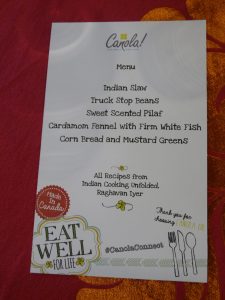
2016-06-09 19.07.03Indian Slaw, Truck Stop Beans, Sweet Scented Pilaf, Cardamom Fennel with Firm White Fish along with Corn Bread & Mustard Greens were plated beautifully and served ‘family style’ at our tables. Every single bite was delectable.  No one passed on second helpings when the bowls of food made another round.

Indian cooking is not in my repertoire, nor did I think it ever would be. But as we ate our meal, Chef Raghavan and Registered Dietician, Patricia Chuey broke it down, banished a few myths and made me believe that I too, could bring this fabulous cuisine to my kitchen table.

Chef Raghavan & Patricia Cheuy, RD - dynamic duo with seamless, informative & hilarious banter.  Courtesy of Canola Eat Well

Chef Raghavan Iyer & Patricia Cheuy, RD – dynamic duo with seamless, informative and entertaining banter. Photo courtesy of Canola Eat Well

As I savoured the delicious meal, I also gathered a few key take-a-way points from Chef Raghavan’s conversation and demonstation with the practical, adorable and comedic Patricia Chuey.
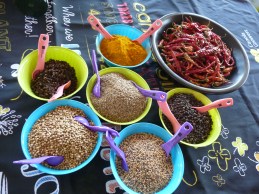
2016-06-09 16.24.101.   “Curry is not a flavour, it is an entity”. In India, curry has nothing to do with spices, it is about sauce but spices form the backbone to the many sauces.

2.   Do not ask if food is ‘spicy’! Ask if it is ‘hot’ – heat is a component of spice.

P11600263.   Chef Raghavan loves canola oil because, “It takes a backseat to the diva of Indian food, which is spices.” It is perfect for cooking as it has no flavour and a high smoke point.

4.   Body language plays an important role in cooking.      Do you want saltiness without too much salt? Don’t get so close to your food! Sprinkle salt from higher above, you will use less and get the desired effect.

5.   Searing is important. When searing fish, give it time.

6.   Cooking spices changes the flavours. To cook them without burning, coat them in a little canola oil first.
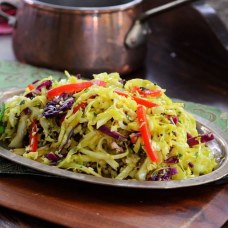
Indian Slaw - Shel Zolkewich Photo

Indian Slaw – Shel Zolkewich Photo

7.  Always ask yourself, “Does your recipe ‘sing’?”

8.   Presentation, presentation, presentation! “If it looks like s#*t…” Remember we eat with our eyes too!

9.   If you haven’t tried cooking Indian food before, start with one of Chef Raghavan’s all-time favourites, Turmeric Hash Browns aka “Shredded Wonders.”

10.   Don’t be afraid to unfold the flavours. Experiment. Enjoy. Celebrate.
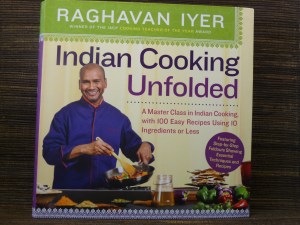
P1160027It is never too late to learn and learning in the kitchen never gets old! Now with my own copy of Chef Raghavan’s “Indian Cooking Unfolded” it’s time to get started and meld some new and fascinating flavours to spice things up at my farm table!
Innovation in Oil

Originally published January 2016 in Canola Digest


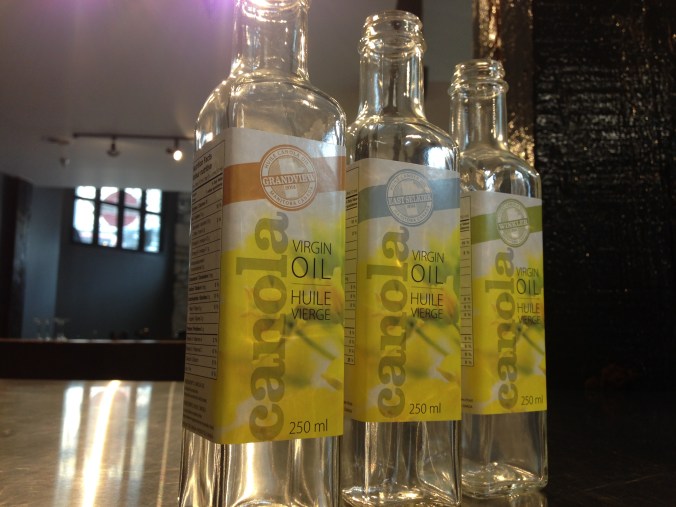
Three Manitoba canola growers are bottling and marketing canola oil with flavour characteristics unique to their own farms.  As grapes produce different flavour subtleties in wine based on their “terroir” – a  French word that covers soil, topography and climate – so does canola from different regions produce slightly different oil.

Photo courtesy of MCGA

Photo courtesy of MCGA

The Manitoba Canola Growers Association (MCGA) and the Manitoba Agri-Health Research Network Inc. (MAHRN) are studying virgin, cold-pressed canola oil, meal and co-products from processing as part of a Canadian Climate Advantage Diet (CCAD) project funded by Growing Forward II.  The three-year $396,000 project is looking at how the interaction between plant genetics and local growing conditions impacts the nutritional profile, flavour characteristics and end-use qualities of Manitoba-grown canola.  MCGA has contributed $10,000 to the project with a goal of adding value and finding innovative uses for Manitoba-grown and processed canola. The venture addresses the keen interest consumers have in local food, ‘terroir’ and virgin cold-pressed oils.

The three farmers involved to date are:  Brian Chorney of East Selkirk, Jack Froese of Winkler and Larry Bohdanovich of Grandview. They all grow the same variety but, surprisingly, the look, taste and even the nutritional profile of each oil is different. The East Selkirk Vintage has a higher iron content. The Grandview oil has a higher vitamin A number, is the strongest in flavour and has the deepest gold colour. Variations also exist in the percentage of crude oil extracted (33.9 – 39.5%) and clarified oil recovered (68.14 – 69.5%).  East Selkirk has the highest rates.  (Note that cold-pressing cannot extract as much oil from the seed, resulting in a high-oil meal.)

Photo courtesy of MCGA

Photo courtesy of MCGA

These unique, cold-pressed oils were test marketed at both the retail and food service level with highly favourable results. They are being embraced for salad oils, drizzles and a Canadian-grown alternative to extra-virgin olive oil.

The 2015 Vintages, prominently labeled with each growing area, will be available in early 2016 at five Winnipeg Red River Coops as well as the Winkler Co-op. These new virgin canola oils are also part of the Buy Manitoba Program. Such distinctive specialty oils demand a premium and sell at 20 times the price of conventional canola oil.

The long-term goal of this project is to develop on-farm enterprises and small and medium-sized business product lines. “It’s always exciting to see innovation in agriculture and Manitoba canola growers are definitely excited about growing future prospects for canola in Manitoba,” says Ellen Pruden, education and promotions manager with MCGA.

DEFINITIONS

Terroir (ter-war):   A term most often associated with grapes and wine, this is the special set of characteristics expressed in agricultural products when the geography, geology and climate of a location interacts with plant genetics. As a result of this project, we now know terroir exists in Manitoba-grown canola.

Cold-pressed oils:   Obtained by mechanically pressing and grinding the seed at a slow speed. Cooling methods are in place to ensure the temperature does not exceed 60 C during this process.