Originally published in the Manitoba Co-operator October 18, 2018

Tracy Wood & Taralea Simpson
Tracy Wood and Taralea Simpson knew they found the perfect spot when they discovered a 95-acre wooded river lot just outside of Portage la Prairie was for sale.
Having long dreamt of owning their own farm-stay, bed and breakfast business, the sisters officially opened “Farm Away Retreat” last month.
With their roots deeply embedded in agriculture, advocating for the industry was an integral part of their business model.
“Agriculture is who we are, it’s what shaped us, it’s what we do now for jobs, it’s where we spend our volunteer hours at — from 4-H to fair board to educating kids at the school level to 4R nutrient management promotion,” said Wood. “We want to bring our knowledge, first-hand experience and love of agriculture to those who are eager to learn more. Plus, there is really no place exactly like this anywhere nearby.”
The sisters grew up on a farm south of Portage la Prairie. Both furthered their education at the University of Manitoba — Wood with a Diploma in Agriculture and Simpson with a Bachelor of Science in Agriculture Degree.
 Wood and her husband, along with their two sons, operate a 250-head cow-calf operation. She obtained Equine Assisted Learning Certification in 2014 and began her business, “Touch of Equine”. Currently, she is also General Manager for the Portage Industrial Exhibition Association.
Simpson has worked as agrologist for the last 25 years, and runs a 50-head cow-calf operation with her daughter and husband.
With their busy schedules, assistance from family and friends was crucial.
“Honestly, it’s a bit hectic at times. Our new business is like an extension of our existing family farms. Through the help of family and some great friends we are able to make it work. It takes organization, teamwork and communication,” Simpson acknowledged. “I think all those things are skills we have learned from 4-H, our farms, our jobs etc. Our ultimate goal is to transition to Farm Away full time as soon as it can support itself independently.”
Wood extensively researched both bed & breakfast and care farm (the use of farming practices for providing or promoting mental or physical healing, social or education services) before the sisters decided on how they would run their farm-stay business. Bridging the ever-growing urban-rural divide was one of their main goals.
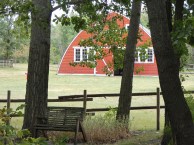 “We want people to come and immerse themselves in agriculture and nature, to experience it first hand. Ask questions and hopefully leave feeling they understand more about where their food comes from,” explained Wood.
They see a wide variety of opportunities to do this, with their motto, “Gather – Learn – Stay” guiding the way.
Pasture tours are complimentary to anyone who stays and offer the opportunity to discuss hay processing, pasture and land management. Calving dates for the various family herds are September/October, February/March and April/May. Winter provides the experience of feeding and bedding for the cattle.
Horses, sheep and chickens are on-site with ‘guest appearances’ from occasional cows, calves and pigs. Lambing takes place throughout the year and Equine Assisted Learning runs from spring to late fall.
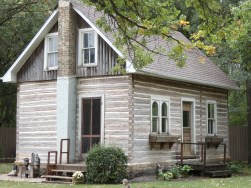 While the farm experience is an integral part of Farm Away, it also offers the opportunity to simply relax and enjoy the peace and quiet of country life. It’s a perfect spot for photo shoots. The house is surrounded by meticulously, manicured gardens. An outdoor pool provides a place to cool off on a hot summer day. Trails and walking paths are abundant. You can wander through an old farmhouse filled with antique decor.
Wood and Simpson are quick to acknowledge the previous owners for the love and care they put into the property which perfectly suited their vision. Serendipity played a part as it only took two weeks to find once they decided to pursue their dream together.
Financing a new business is always a challenge, but the sisters admit the first and toughest hurdle they faced was believing they could do it. “It’s daunting to step out of the familiar and into something new, admitted Simpson. “Putting the plan into place and how to make it happen was challenging.”
The biggest rewards to date has been the enthusiasm of others – those who have visited the property or checked out the website are cheering them on, supporting and encouraging them in their venture.
 Knowledge is nothing unless you share it with others. These two passionate agvocates are taking that message to heart. They hope the first-hand experiences they are offering at Farm Away will leave a lasting impact and better understanding of agriculture with each and every guest.
“Tell me and I forget. Teach me and I remember. Involve me and I learn.” ― Benjamin Franklin
Their advice to anyone wanting to follow their agvocating through experience model: Do your research, talk to people to get ideas. Don’t be afraid to take a chance. Do something you are passionate about.
For more information visit www.farmawayretreat.com
E-mail: hello@farmawayretreat.com
Phone: 1-204-870-1564 or 1-204-857-1910
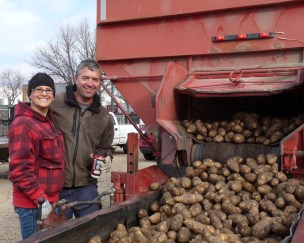 How does it feel to give away 35,000 lbs of potatoes in just under 5 hours?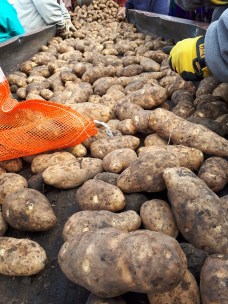
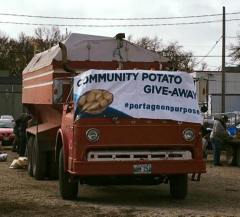 “What I loved about it, is that we’re not just targeting one sector of our community. We had people of all ages, all income brackets and walks of life stop by,” said Mark. Many people on fixed incomes and social assistance came up to him to express just how much this was helping them out, shake his hand and thank him. Others stopped by out of curiosity or because they knew the Peters. Some didn’t even need the potatoes but just thought it was a cool idea.
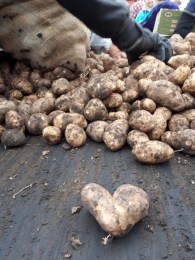 Inadvertently it also bridges the farmer-consumer gap. The young ones in the crowd often opened up the best conversations. “Why are the potatoes dirty?” ”How come there are so many different shapes and sizes?” “Why are you giving them away?” Many discussions ensued on food waste, what happens to produce before you find it on your store shelves, and why it feels good to give back when you can.
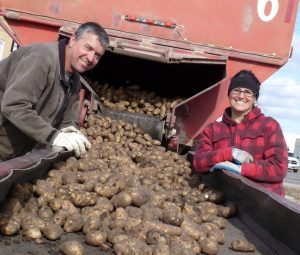 Many asked if this will be an annual event. When it comes to farming, it all depends on the year and success of the crop. The Peters remember and appreciate how generous people were with them when they were young adults, so when they are in a position to give back, they definitely will.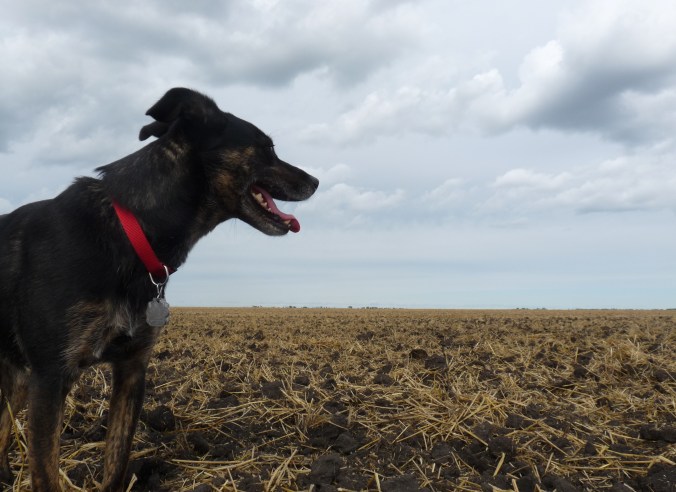


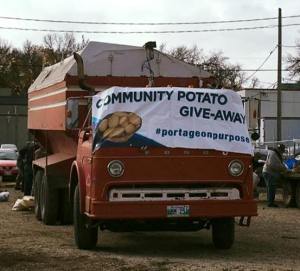 Despite the cool Saturday morning, people were already lined up by 8:30 – a half hour before the Portage Community Potato Give-Away was slated to start. They came pushing strollers, riding bikes, walking and on scooters, as well as by car and truck. Many heard about the event on local media or on-line, while others just happened by and wondered what all the fuss was about.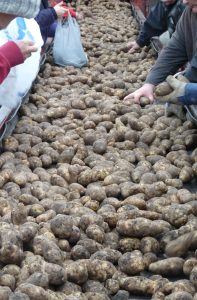
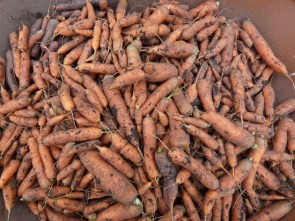 Those who had excess garden produce — tomatoes, beets, carrots — brought it by to share with the crowd. Others dropped off bags and boxes to ensure those who didn’t have containers had something to cart their potatoes home in. One young family stopped by to get their spuds, then stayed to help others gather theirs.
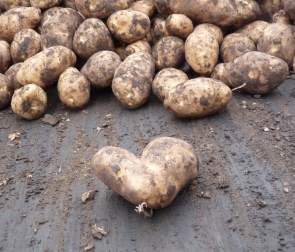 Inadvertently, the event also offered an opportunity to agvocate (advocate for agriculture) and engage in farm to food discussions. The young ones in the crowd often opened up the best conversations. “Why are the potatoes dirty?” “How come there are so many different shapes and sizes” “Why are you giving them away?” So discussions ensued on food waste, what happens to produce before you find it on your store shelves, and why it feels good to give back when you can.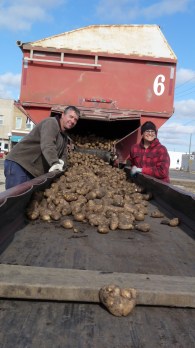
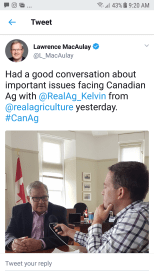 Thank you for taking time to sit down for an
 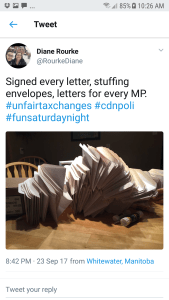 And as our industry was not consulted prior to the announcement, which coincidentally was during our busiest season, we’re
 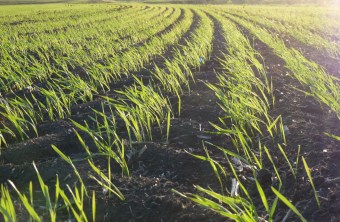 As farmers we take a significant risk every spring when we put a crop in the ground. We rely on Mother Nature to cooperate and hope for a decent harvest to recoup our investment in the fall. And then, we hope commodity prices reach the point to give us a decent return. We cannot demand an increase in the markets when our expenses go up, or our crops fail. Along with the financial risk, we have no employee benefits — vacation pay, pension plans, maternity/paternity leave etc. So how can you fairly compare our income to a wage-earning employee?
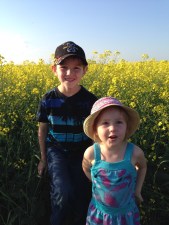

 The patience a farmer needs to wait for the
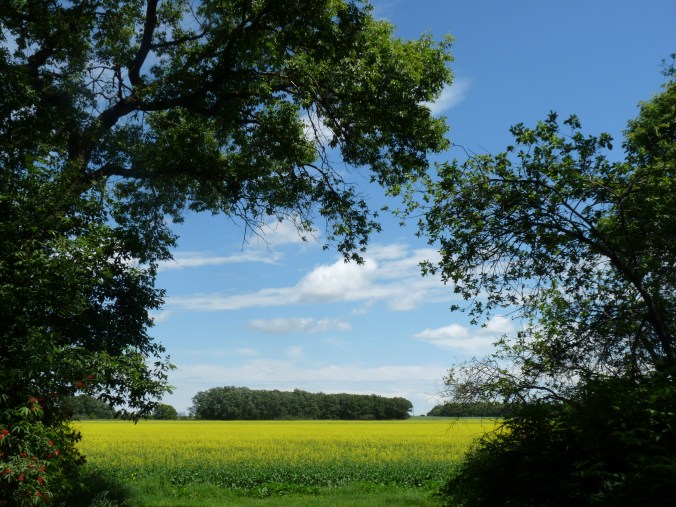
 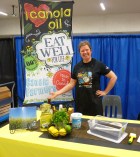 The majority who stopped by were genuinely interested in conversation, with many sharing how they use canola oil in their kitchens. This gave me the opportunity to say, “Thank you,” and, “As a canola grower, I appreciate you using a product we grow on our farm.” Something happened in this moment. A connection was made. Many did a double take, perhaps surprised. When our crops are sold directly to a grain company or processor, there is no contact with the end-user. I’m not sure I’ve ever had the opportunity to directly thank a consumer, but it felt good.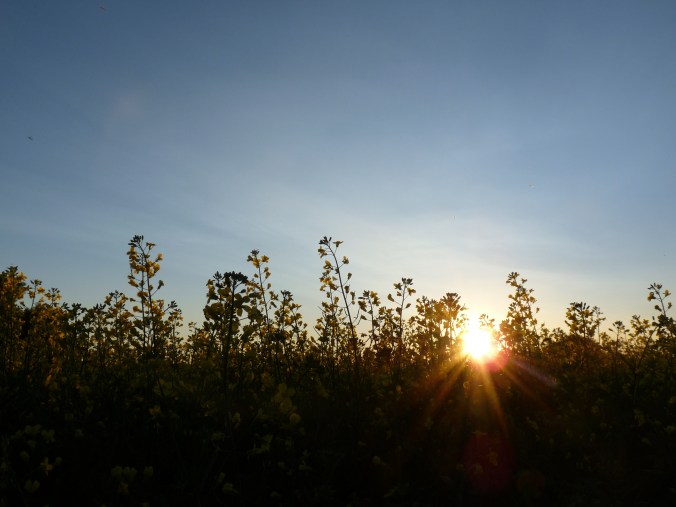
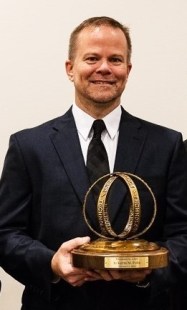
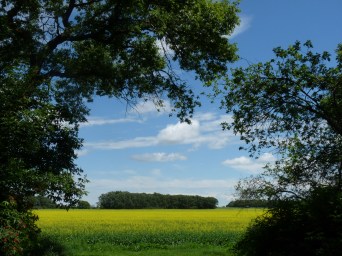 So begin with telling your story, your way. Don’t get bogged down in the science and terminology. Explain how precision plant breeding benefits your farm, the environment and food production.
 Sandi Knight