Originally published in the March 2017 issue of Canola Digest
Sandi Knight photo
What happens Canada’s 150th birthday and Canola’s 50th anniversary collide? The Canadian Agriculture and Food Museum (CAFM) in Ottawa celebrates with a nation-wide tour of a new travelling exhibition, “Canola: A Canadian Story of Innovation”. This exhibit made its debut at Canola Council of Canada’s “Good As Gold” 50th Annual Convention in Winnipeg on March 7—9. It will be on display at Winnipeg Richardson International Airport in the arrivals hall through March 23rd.
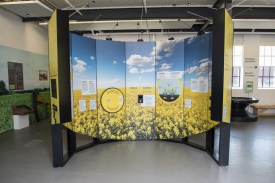
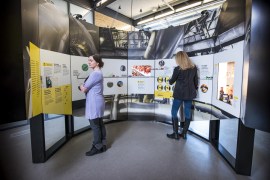
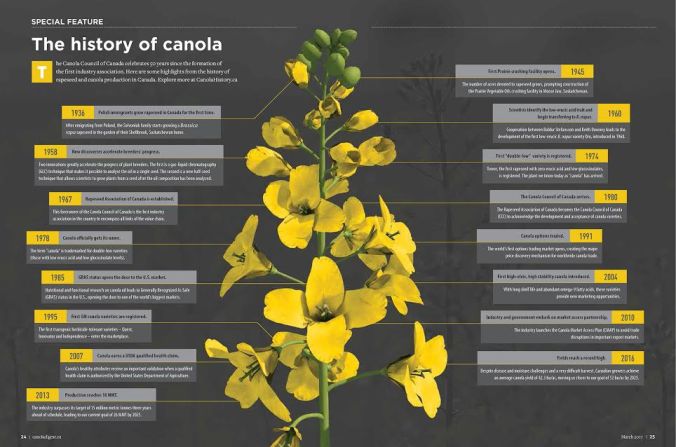
Designed to tell the story of canola to Canadians, this 500-square-foot exhibit is interactive, hands-on and designed for all ages. It is comprised of two C-shaped configurations — one to make you feel immersed in a field of canola, the other as though you are walking into a processing plant. It will highlight canola’s versatility from cooking oil to canola meal, biofuels, ink, plastics and cosmetics. Visitors will learn the history — from a crop that didn’t exist 50 years ago to the multi-billion industry that exists in Canada today. They will discover the on-going science, research and innovation behind canola.
Credit: Canada Science and Technology Museums Corporation
Credit: Canada Science and Technology Museums Corporation
Over the next five years, it will travel to museums, science centres, indoor and outdoor exhibitions, hospitals, shopping malls and airports. A map and links can be found on-line at CAFM.
The main gallery of the CAFM will also house a long-term, more in-depth, 2,500-square-foot exhibit. It will connect to the museum’s demonstration kitchen, providing access for hands-on learning food experiences. The museum, which hosts 200,000 visitors/year, is a working farm, so as guests tour they will see canola growing and learn how canola meal is used in food rations for livestock and poultry.
The CAFM wants to ensure the canola story is accessible to all Canadians, so those unable to visit either exhibit will be able to access information and resources on the website.
Kerry-Leigh Burchill, director general of the CAFM states it was a fortuitous meeting with Simone Demers Collins, market development & promotions coordinator of Alberta Canola, at a Grow Canada Conference in Ottawa that led to this new exhibit to celebrate Canada’s 150th. Burchill said the museum was looking for a crop or a process that had “a very strong connection to innovation by Canadians in the fields of science and technology when it came to agriculture.” To which Collins replied, “I think that story can be canola.”
Canadian canola grower associations and industry partners then stepped up to the plate to collaborate and sponsor the exhibit.
To ensure accuracy and a balanced representation for the exhibits, a National Advisory Council provided advice and input. The 13 member panel from a wide cross-section disciplines, included Dr. Keith Downey, one of the fathers of canola. Focus groups and surveys ensured terminology used was understandable to the general public.
The goal is to showcase agriculture as an ever-evolving industry, highlight the heritage of this made-in-Canada crop along with the benefits of growing canola from health, food security, environmental, economic and sustainability perspectives. Burchill hopes the exhibit will even inspire young students to chose a career path in agriculture.
Communication and education are key to the advancement of agriculture in Canada. This initiative will be a valuable reminder of just how far the canola industry has come in 50 years.
Courtesy Canola Council of Canada
Thoughts on "Canola: A Canadian Story of Innovation"

Sandi Knight photo
“I think it’s an opportunity to be able to allow the urban population in particular, and farmers as well, to see where canola came from – the humble beginnings, where it’s going and the variety of products available from canola.” — Bruce Dalgarno, Farmer, Newdale, MB

Sandi Knight photo
“When visitors have the opportunity to learn from our farmers, hear their stories about growing ingredients for our recipes and food for our tables, a deeper farm to food connection is made. The display will give Canadians an opportunity to #ExploreCanola.” — Ellen Pruden, Education and Promotions Manager Manitoba Canola Growers/Canola Eat Well
Sandi Knight photo
“As the Canola Council of Canada celebrates 50 years in 2017 we couldn’t be more proud to tell the story of five decades of achievement and transformation in the Canadian canola industry and the exciting opportunities ahead. The exhibition is an excellent example of the innovative and collaborative spirit that’s driven canola’s success and we’re honoured to be able to launch the #ExploreCanola tour at our upcoming Convention.” — Patti Miller, President, Canola Council of Canada

Sandi Knight photo
“It is undeniable that the science, research and innovation behind canola changed how a lot of agriculture is done around the world”. — Kerry-Leigh Burchill Director General, Canada Agriculture and Food Museum
 Sandi Knight